Ages 3-6

Music for Young Children Program

Where you and your children learn to love music together. Opus 1 uses the acclaimed Music for Young Children curriculum for Sunshine and Sunbeams group keyboard programs.

Learning through play

Solid music foundations for young beginners.

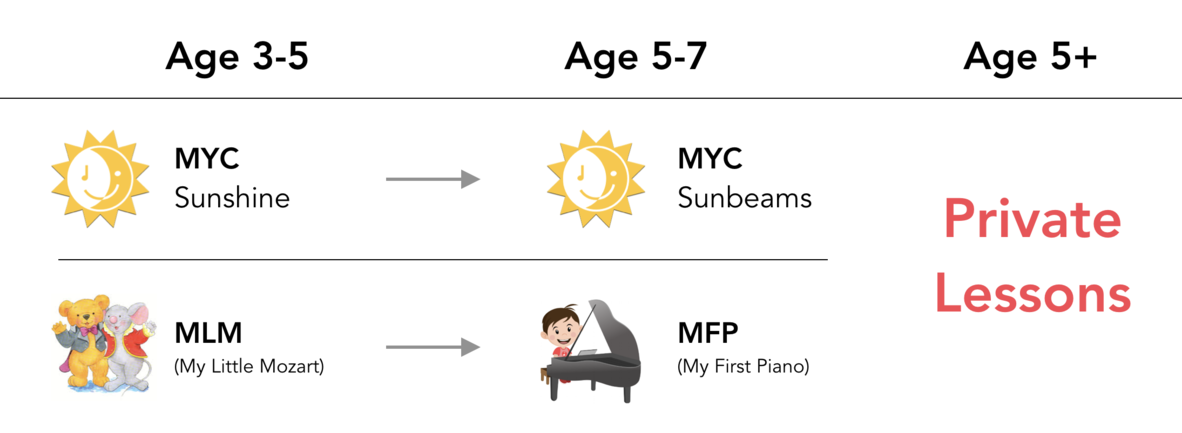
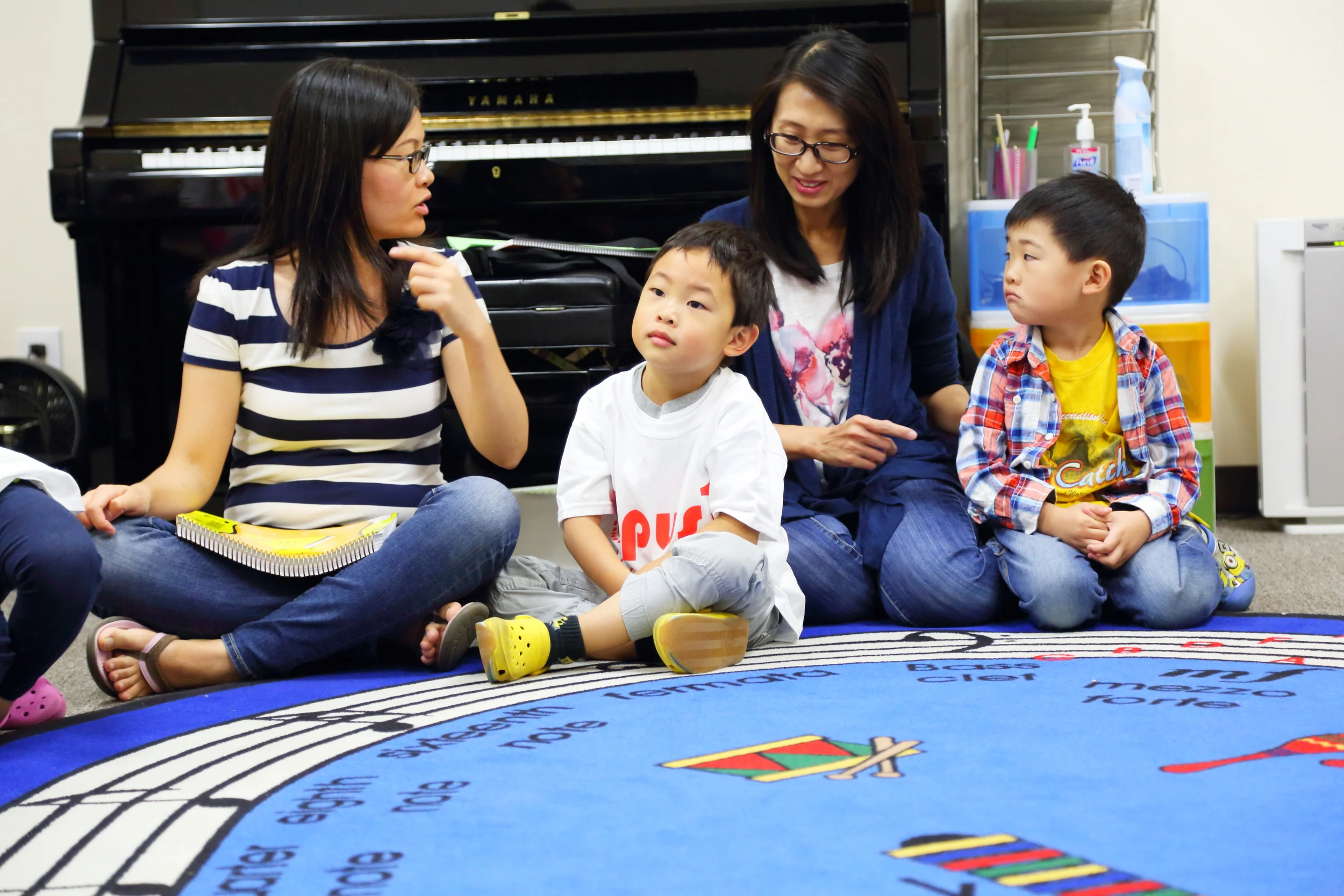
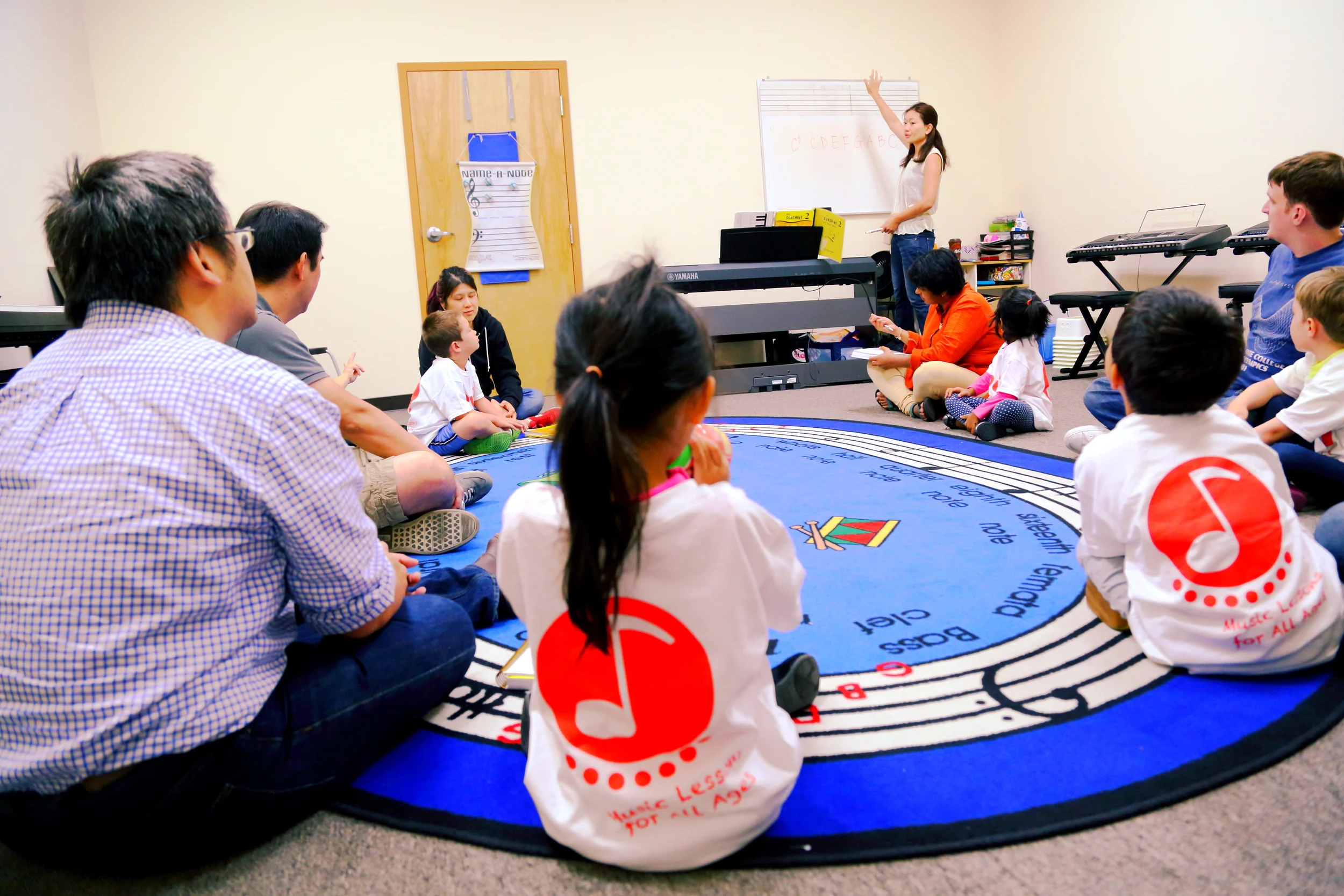
MYC helps children develop musical foundations through play and the four learning styles. Sunshine serves ages 3-4 and Sunbeams serves ages 5-6.

Appropriate early music education should be interactive and fun for both child and parent, encouraging long-term involvement in music.

Summer trial schedule

2026 Summer Trial Schedule.

All trial classes are held at our Mountain View - Grant Campus. Parent participation is required.

Saturday trials

  • Saturday, July 18
  • Saturday, July 25
  • Saturday, August 1
Sunshine 9:20 - 10:10 am
Sunbeams 10:40 - 11:30 am

Sunday trials

  • Sunday, July 12
  • Sunday, August 2
  • Sunday, August 9
Sunshine 9:30 - 10:20 am
Sunbeams 10:45 - 11:35 am

Available sessions

Sunshine and Sunbeams.

Compare the two MYC levels, then choose the session that fits your child's age and schedule.

Ages 3-4

Sunshine (36 weeks)

Mountain View - Grant Campus Only

Requirement: Personal piano or keyboard at home. Parent participation.

Sunshine is a keyboard program for ages 3-4 and the starting point of the MYC Method, building their foundation in music reading and playing the piano. Students experience movement through beats and rhythms, as well as developing fine motor skills with rhythm instrument ensemble playing. Children start learning the geography of the piano and note-reading through MYC Critters and stories they can relate to. By the end of Sunshine, children are able to play their first scale, C Major, and read from the staff. Pre-reading experiences such as identifying like/different sorting, patterns, and reinforcing music concepts through at-home activities with gluing and coloring are all part of this level. Once a child has finished Sunshine, they are ready to move onto Sunbeam.

For the best success in this level, Sunshine students should be turning 3.5 or 4 years old within the first three months of the start date of the class.

How this level differs

  • Sunbeam covers all keyboard critters over the first 10 weeks, compared with 24 weeks in Sunshine.
  • Sunbeam students move to staff reading as of week 11, compared with week 18 in Sunshine.
  • Sunshine students need more reinforcement to build a strong foundation before transferring to Sunbeam.

Goals

  • Create a positive, happy habit of learning music
  • Develop the child's listening skills
  • Master the music alphabet from A to G
  • Recognize and reproduce on the keyboard high, middle, and low sounds
  • Play patterns on the keyboard by ear
  • Read line and space notes
  • Echo sing different patterns using doh to lah
  • Use 2/4, 3/4, and 4/4 time signatures
  • Employ different rhythms in singing, clapping, dictation, and reading
  • Reinforce left and right modality and fine motor control in the individual fingers
  • Experience independence in learning and interaction with other children
  • Learn dynamics by connecting daily sound levels to music
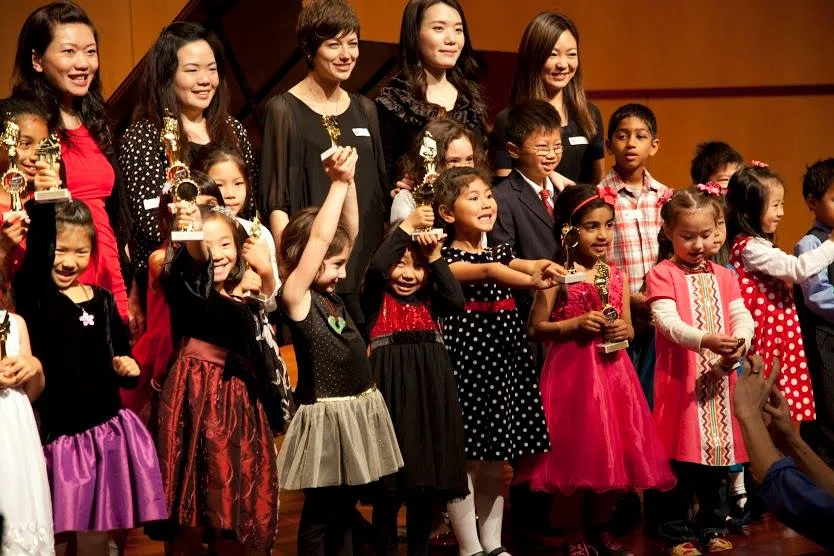
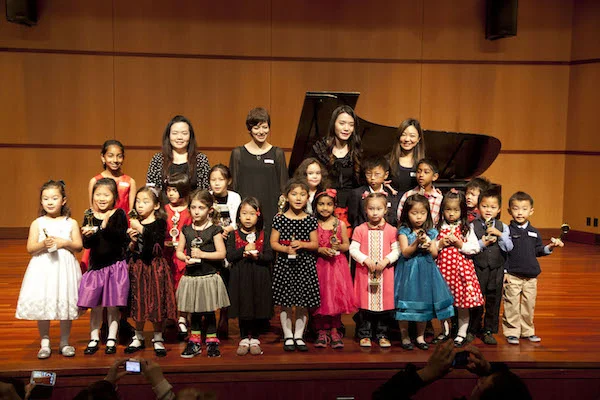
  • Play in a recital, either solo or with the class, in a keyboard ensemble or rhythm ensemble

Available sessions

  • Saturdays: 9:15 - 10:05 am
  • Saturdays: 10:15 - 11:05 am FULL
  • Sundays: 9:15 - 10:05 am
  • Sundays: 10:15 - 11:05 am
Starts
August 22, 2026
Ends
June 6, 2027
Tuition
$1560 (includes $50 registration, $250 materials, and $1260 tuition)
Enroll in MYC Sunshine
Ages 5-6

Sunbeams (36 weeks)

Mountain View - Grant Campus Only

Requirement: Personal piano or keyboard at home. Parent participation.

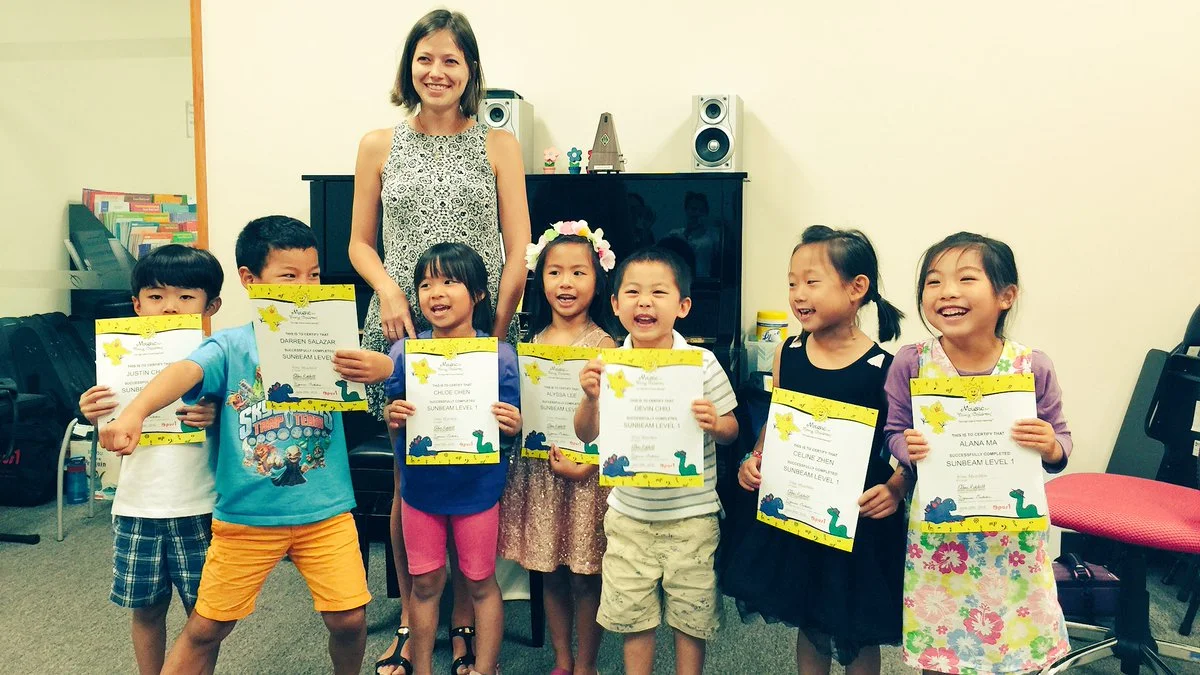
Sunbeams is the entry point of the MYC Method for ages 5-6. Students are first introduced to piano geography and rhythms through MYC Critters to help set their foundation of music knowledge and education, while the pace of learning matches their developmental stage. Vocabulary development is the focus for this age group. This level introduces big kid terminology, finger numbers, and keyboard geography. Once a child has finished Sunbeam, they are ready to move onto private lessons.

How this level differs

  • Sunbeam covers all keyboard critters over the first 10 weeks, compared with 24 weeks in Sunshine.
  • Sunbeam students move to staff reading as of week 11, compared with week 18 in Sunshine.

Goals

  • All goals from the Sunshine Program
  • Play warm-ups including short studies and scales in the keys of C, G, and A minor
  • Learn primary chords in C, G, and A minor
  • Transpose some simpler pieces from the key of C into G and A minor
  • Play simple nursery rhymes by ear
  • Read middle C to high C in the treble clef and low B to ledger line D in the bass clef
  • Echo sing using hand and arm signs
  • Begin to sing in 6/8
  • Recognize major and minor tonality in singing and keyboard pieces
  • Develop the use of the two hands separately and together
  • Apply musical knowledge to compose original music

Available sessions

  • Saturdays: 11:15 am - 12:05 pm FULL
  • Sundays: 11:15 am - 12:05 pm FULL
  • Sundays: 3:00 - 3:50 pm
Starts
August 22, 2026
Ends
June 6, 2027
Tuition
$1560 (includes $50 registration, $250 materials, and $1260 tuition)
Enroll in MYC Sunbeams

What each class includes

Each Sunshine and Sunbeams class builds complete musicianship.

Singing

Development of ear training and sight-singing through solfege is an integral part of the program. Songs reinforce expressive singing, dynamics, and core concepts.

Listening

Listening activities include by-ear playbacks, melodic dictation, rhythm identification, dynamics, chord quality, composer style, and well-known melodies.

Homework

At-home activities reinforce classroom concepts and help parents stay connected to each child's musical progress.

Keyboard

Students learn keyboard geography, note reading, patterns, scales, and simple pieces through age-appropriate group instruction.

Rhythm Ensembles

Rhythm ensembles reinforce reading, ensemble skills, great melodies, musical styles, and the joy of playing together.

Composition

Students apply musical knowledge by creating original ideas and connecting theory concepts to sound.

Materials

MYC materials support in-class learning and at-home review with books and activities designed for young beginners.

Parent Involvement

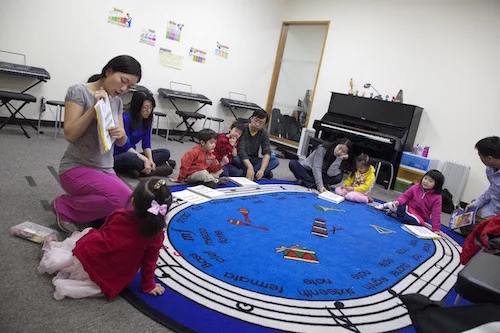
Parent participation is integral to MYC. Families learn alongside students so practice at home stays productive and encouraging.

For more information: www.myc.com

Need help choosing?

Not sure which class is right for your child? We can help.